Laccaria proxima is known from both Europe and North America. In my area it is strictly associated with pine plantations. I believe that the pine species is the Maritime Pine, Pinus pinaster. The occurrence of L. proxima is variable, but it appears to be extremely common in well established plantations with trees of a diameter of around 300 mm.
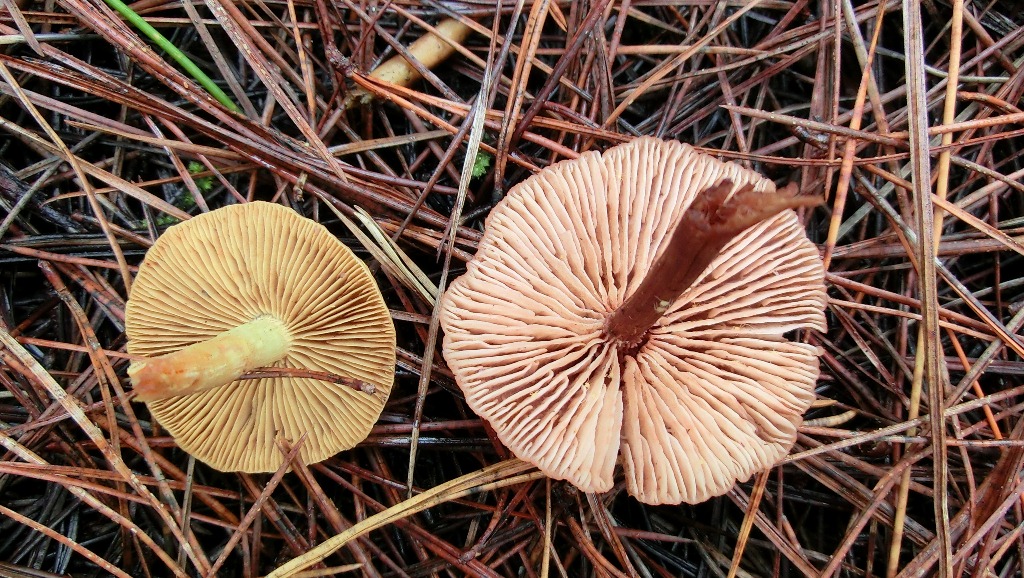
In June in these forests there is a wide variety of fungi, including several small mushrooms with brown caps. Laccaria proxima is distinctive in that it has pale salmon pink gills that are not crowded. This distinguishes it from another abundant species with yellow gills that are crowded as shown below. Laccaria proxima has a white spore print. This should be checked.
Laccaria proxima, with pink gills on the right.
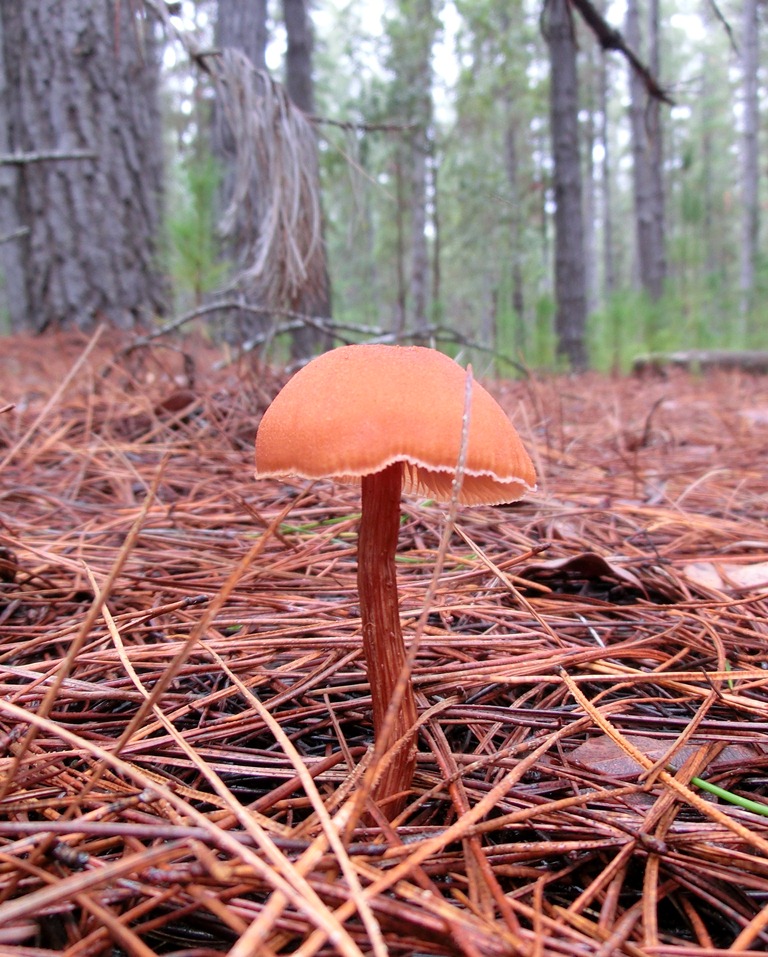
L. proxima varies in size from about 20 mm to 80mm in diameter. The stems can be up to 100mm long and they emerge from the pine needle mat. Underneath the mat, one can see the white mycelium in a layer on the top of the soil. As the mushrooms grow, they move from having slightly inrolled margins to curling up so that the gills are exposed. Below are pictures of the different stages.
A young specimen of Laccaria proxima
Mature specimens of Laccaria proxima
A distinctive feature is the striations on the stem. These stems are quite tough. A small white mite was present on the specimens that I picked in late June. They are a long lasting mushroom that does not suffer gross attack by insects or slugs. In the sandy soils of WA pine plantations, these mushrooms are sometimes contaminated by sand that splashes up as a result of falling raindrops.
I prepared some of these by washing them and then frying in a pan with oil. I had to decant some of the water during cooking as it had caught up in the gills. I added some ham to the mixture in the pan and ate them on toast. The taste resembled Volvariella slightly, though it was not as intense. I found that it left a pleasant after-taste when I had finished the meal and this lingered for some time.
There is a smaller abundant native species, Laccaria lateritia. It is very similar in general appearance, but it is smaller and the stems do not display the same striations as in L. proxima. It is probably edible as well but I have not tried it at this stage. It is interesting that various early documents refer to a red, juicy mushroom being eaten by indigenous people. Laccaria lateritia is possible candidate for this, given it’s abundance, as is some species of Hygrocybe, though they are less abundant these days. There is insufficient information to be able to identify the mushroom in question.
This is an interesting mushroom because of its abundance and well established edibility from overseas experience. Though it is not considered to be a choice edible, it is quite palatable and the pleasant after taste makes it interesting. I suspect that it has a flavour-enhancing quality to it.
11 January 2021
Recent chemical analyses have revealed the presence of a couple of unique alkaloids in this species. These are called proxamidines and the molecules contain and 8-membered ring that includes two nitrogen atoms. One of these is shown in the figure below. The two blue nitrogen atoms can be seen in the structure. The compounds were tested for biological activity but the only thing that was found was a weak herbicidal effect on a cress specimen using a standard technique. It has been suggested that these alkaloids may be responsible for the lack of insect attack that I mentioned above.
Proxamidine
There are another couple of interesting features of Laccaria. The genome of Laccaria bicolor was published in 2007 at which time it was the largest fungal genome yet published at 65 megabases. In an article in Nature, some features of this rather large genome are discussed. One feature that is noted is the coding of multiple genes that give it the ability to utilise nitrogen sources, particularly ammonia. I have read this somewhere else where it was compared with Hebeloma aminophilum in this regard. I have actually tried to test this out by spreading some urea on a patch of pine duff but the only thing that was apparent was a greater than normal amount of Amanita muscaria in that patch.
Yet another feature of Laccaria is that it has been found to be stimulated by electrical impulses so as to produce a greater number of fruiting bodies. This has been found both in field tests and in nursery pots. Many other mushrooms respond to the same treatment, notably Shiitake.
The spores of this species show spikes on the surface and are approximately 8.7 x 6.4 microns. This distinguishes them from the similar Laccaria laccata which has round spores.
Xerula australis has synonyms Xerula radicata var. australis and Oudemansiella radicata var. australis. (ref: Bougher and Syme) There are several closely related species that are difficult to distinguish even with a microscope.
While this species is reported to be edible, it does not find too many rave reviews, although one variety of Xerula radicata is being sold in kit form in China and they describe it as delicious (I suppose they would!).
It has been suggested that they might make a colourful addition to a stir fry. You would need to find a few of them though, as they are only a small mushroom with a cap 20-40 mm across and a tough inedible stem. They have quite a distinctive appearance as shown in this image kindly provided by sunphlo.
An interesting feature of Xerula radicata and most probably this variety is that it contains an anti-hypertensive agent known as oudenone. (who’d have known?) The cultivation of the fungus in liquid medium and extraction of the active ingredient is the subject of US patent 3835170. The information in that patent suggests that the active ingredient is reasonably heat stable and should survive a mild cooking process at least. Whether this is a good thing or not might depend on the individual.
I have set up a new category for fungi that I have not had any personal experience with, or reports of, other than that they are mentioned in the literature as being edible. If anyone has experience with eating these, I would like hear about it.
In other parts of the world Laetiporus sulphureus is known as chicken of the woods and is considered a good edible mushroom. I had not heard of any occurence in Australia, but Ray Palmer of north Queensland has reported it growing on Eucalyptus near his home. You can see Ray’s pictures on his Flickr site, here.
I would emphasise that I have not eaten this mushroom, and I am not aware that Ray or anyone else has either. So it is in the ‘potential’ category for the moment. But an exciting prospect!
Note 26/2/2013. Since it is reported as edible in the comments below, I have upgraded this to the ‘edible but untried’ category.
If should be noted that the edibility of L. sulphureus depends on the substrate. On this page, they recommend that you don’t eat it if it is growing on Eucalyptus.
If anyone has any further information on this, I would be most interested to hear about it.
Footnote:
As noted in the comments below, Forthferalz has drawn my attention to some other references to this fungus in Australia. This picture is provided by blueswami.
I am not sure what angle this was taken at, but in comparison with other pictures, it seems to be upside down. I think it looks more realistic like this:
There appears to be quite a wide variety of morphologies and colours for this genus. Even in North America, where it is widely consumed, there appears to be differences between the east and west coast experiences, as well as some confusion about which species is being consumed.
Update 16/04/2016
I have recently had the chance to observe this mushroom first hand in the Dorrigo/Bellingen area of NSW. It was growing on fallen logs and on the base of a living tree which was also host to Omphalotus nidiformis. These observations were made in March of a dryish year and I was able to see examples of it over a range of forests. Here is a picture of one on an exposed lateral root of a rainforest tree along with Omphalotus.
Laetiporus sp. together with Omphalotus nidiformis
I haven’t shown a picture of the pores, but they were white . This isn’t the right colour for Laetiporus sulphureus. It is interesting also that this species appears to be more common in the warmer regions of the country, while L. sulphureus grows in places like England.
Some light is thrown on this subject by Michael Kuo, the Mushroom Expert. His comments can be found at this link.
It seems that there are numerous closely related species of Laetiporus in the US. It is entirely possible that the species here in Australia is yet another one. The fact that the ones I have observed grow at ground level indicates that they are not L. sulphureus. To my knowledge it has not been formally named yet. Neither has it’s edibility been established. Given that there have been numerous cases of people experiencing gastro-intestinal distress from eating various forms of this mushroom in America, it is entirely possible that our local species will cause the same problems. So there it stands. At first exciting, but in the end an enigma.
Update 1/03/2024
Since I first wrote this post, there has been a lot more information about the species in Australia. It appears from several DNA analyses that the species here is Laetiporus versisporus. It grows everywhere from Tasmania up to Far North Queensland, though it is more common in the higher latitudes. Some people have eaten it without apparent ill effect.
Similar species appear to be common in Uruguay, which has a similar latitude to parts of Australia, in February/March, often on Eucalyptus.
For a few years I have noticed some mushrooms coming up after I had burned piles of branches and stumps and so on. At first, I thought these were Volvariellas, but closer inspection showed that they were Pluteus petasatus. They have quite a distinctive cap, grow in clusters and have a characteristic pink spore print.
Pluteus petasatus
For some reason, these mushrooms tended to grow at the base of some tall weeds that also grew after the fire. I have no idea what the basis of this association is.
David Arora records this mushroom as being the best of the genus Pluteus, but after frying some up and tasting them, I concluded that they were very similar in taste to Volvariella speciosa (now called Volvopluteus gloiocephalus) and are not something that I would be drawn to eat in particular. Like Volvariella, they would probably go well with some silverbeet or spinach.
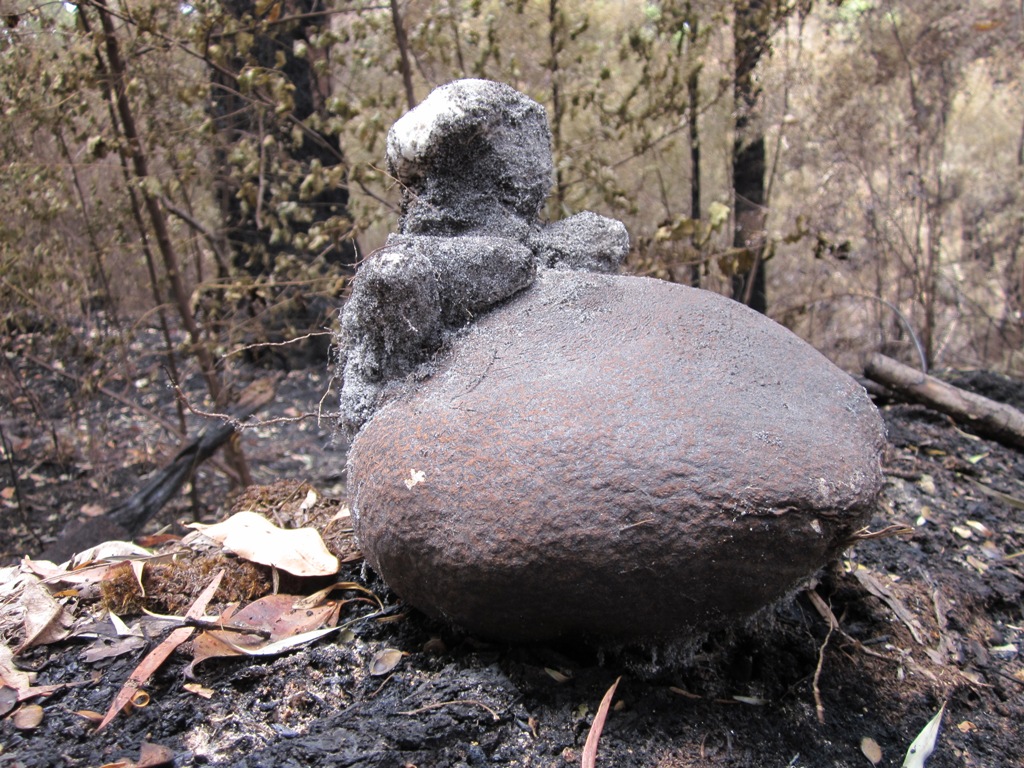
After there has been a bushfire in the forests around here, and in fact in many parts of Australia, there are a number of fungi that are triggered to send up fruiting bodies. One of these is Laccocephalum mylittae (formerly Polyporus mylittae), known in early colonial times as Blackfellow’s bread. This is because it was eaten by the Aboriginal people and it has a sclerotium with a texture rather like grains of cereal pressed together. When sliced it is dense like pumpernickel. This fungus may well have been consumed as a food for tens of millenia. It is widespread across the country.
The fungus spends most of its existance feeding on fallen or buried logs. From this woody matter it transports material to a large underground sclerotium which slowly grows in size. It is reported to grow to as large as 600 mm diameter, but the ones I have seen have been about the size of a football. The sclerotium is heavy, with an estimated relative density of 1.1. This growth may go on for 30 years or more, until there is a fire to trigger off the cycle. The sclerotium rapidly sends forth a fruiting body which is apparent at the surface of the ground within a couple of days of the fire. These are commonly seen along side fallen logs. In my part of the world it occurs in Karri forest. The mushroom is fairly non-descript at first, eventually becoming more defined as it consumes the sclerotium over a period of about a month.
Here is a young mushroom with the sclerotium attached. The mushroom is white, whereas the sclerotium has a dark brown skin covering it.
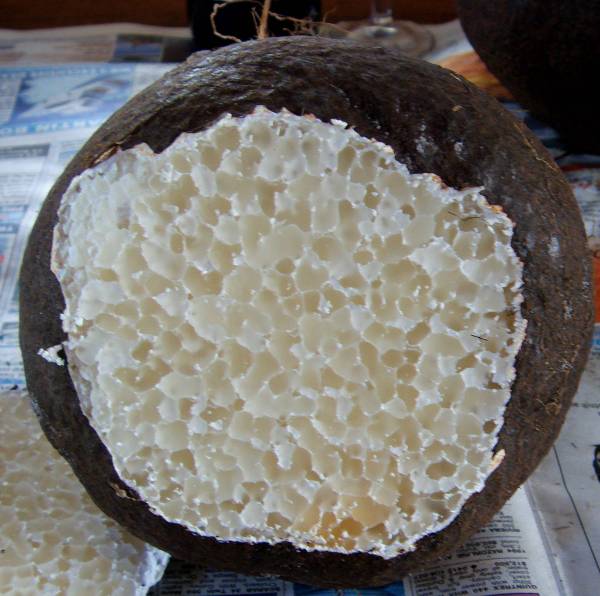
One can easily imagine that the Aboriginal people would have swept through areas they had burned a couple of days earlier to harvest the scelorotiums, which can be quite numerous. Being dense, they provide a significant food source and they do not appear to decay rapidly. They can be crumbled up and dried out into something resembling a cereal grain. Whether the Aboriginal people did this is probably unknown. The picture below shows the scerotium cut open to reveal the inner texture.
It is entirely possible that this fungus could be cultivated like any other wood rotter. I have a specimen that I will attempt to clone if I have the time and inclination. It might make an interesting addition to our native food cuisine. I would describe the taste as bland, but a friend found it to be quite pleasant. It would lend itself to some creative cooking. Apparently, it has significant nutritional value.
The mature specimen is shown below. It can be seen that the mushroom has grown, while the sclerotium has become depleted.
The spores of this species are shown in the image below. These measurements were done using the software called Piximetre. I am still mastering this software, the instructions of which are written in French, but I think this captures the main features. The average spore size is 9.4*4.3 microns. More detailed statistics are shown. These spores were stained with Melzer’s so judging by the image they do not appear to be amyloid. The measurement shown in blue is from my microscope software which was calibrated with an etched slide. The image is taken at 40X without oil.
Spores of Laccocephalum mylittae
The structure of the pore surface is shown in this image. The spaces on the scale are 1mm.
Pore surface of Laccocephalum mylittae
The pore depth is slightly greater than 2 mm.
Pore depth Laccocephalum mylittae
March 2025
The gelatinous mass that makes up the bulk of the sclerotium is an interesting material. It occurs as distinct pieces that have white thread-like material between them. The whole mass can be broken up into individual grains manually with some effort. I had thought that this material might contain starch, but when tested with Melzer’s reagent (which contains iodine) it did not produce a blue colour, indicating that starch was not present. Disintegrating some in a blender with some water produced a slightly cloudy liquid. When tested with alkaline copper sulfate (Biuret test) the liquid did not produce a purple colour, so no readily soluble proteins are present.
Boiling it in water has little effect. Frying it does not produce a Maillard reaction. Raw, it has a very slight sour taste and a firm texture and while not completely unpleasant, it is not something one would choose to eat unless there was nothing else available. It does not seem to take on flavours if cooked with other things. The major feature is the firm gelatinous texture. I found that mixing the grains with some sweet fruit syrup made it palatable but not exciting.
It is easy to think that this mushroom might be native to Australia, given the association with the indigenous people, but in fact it occurs in other places, particularly in China where it has been used in traditional medicine as an anthelmintic (anti-parasite drug). The mycelium has been produced in submerged culture and the active ingredient isolated. It is a metalloprotease that acts on some of the proteins in the parasites. This class of compounds is common in fungi, and the toxin from Chlorophyllum molybdites is a metalloprotease.
Considering that this sclerotium can remain in the soil for decades, it is perhaps not surprising that it might have some defence against insects that might seek to attack it. In my part of the world, termites are ubiquitous and they attack the karri timber that grows in the same area as the mushroom, but the sclerotia are untouched. Similarly, worms are common but they don’t eat the sclerotium. The fungus has been incorporated in some pet deworming formulations.
After chopping some of the sclerotium up in a blender during one of my experiments, I cast the excess material onto the lawn outside. A couple of days later I noticed some magpies pecking at it. I am not sure what attracted them but they seemed to think it was worth eating. I guess it may have sorted out any parasite problems they might have. I also guess this might be useful for treating chickens too. I think that birds are equipped with chitinase enzymes that might be required to digest this material. Which makes me wonder how the human digestive system handles this stuff.
Magpies eating shredded Laccocephalum mylittae
In a 1977 paper titled “The edibility and possible zoochory of the fungus Polyporus mylittae” Nigel Sinnot mentions some taste tests on a batch of sclerotia that were dug up by a tractor. The conclusions were much like mine. He also mentions that on various occasions, for example as mentioned by Cleland, pieces of fresh sclerotium have been buried and kept moist in which case a fruiting body developed. (This is also known to occur with the sclerotia of Polyporus tuberaster, according to David Arora. ) He suggests that this ability to form fruiting bodies from fragments of the sclerotium may confer some advantage to the organism. He further suggests that wombats might be part of this picture, though this would not be the case here in Western Australia.
Examination of the structure of the fruiting body suggests that it is in fact the result of the fusing of a number of primordia into a single structure. This is illustrated in the image below. Note that the fertile surface runs right down to the soil interface. The section on the right is completely separate from the rest of the mushroom until it fuses at the top. This would tie in with the observation that pieces of sclerotium can be form fruiting bodies on their own.
Close-up of structure of Laccocephalum mylittae fruiting body.
Sinnot quotes J. H. Willis who doubted that the fungus ever fruited under ‘natural’ conditions. This differs from the mushroom Fomitopsis hartmannii (formerly Laccocephalum hartmannii) which sometimes makes an appearance on mushroom forums as growing from apparently undisturbed ground.
In a recently published book The Fungi of Kangaroo Island and Beyond, by the Pamela and David Catcheside, the authors show a fruiting body developing on an agar plate. I have little doubt that it could be cultivated in much the same manner as Morchella species and induced to form sclerotia.
A question that naturally arises is whether the fruiting body can be eaten. There seems to be no mention of this anywhere. I think that it would be rather a tough meal for the naturally occurring mushroom. It might prove more tender in cultivation. I taste-tested a small piece and it didn’t have any pronounced taste, though I thought I could detect a slight ‘soapy’ taste.
13 May 2025
Today I came upon a quote from George Augustus Robinson, Protector of Aborigines in Tasmania. It is in Tim Flannery’s book “The Explorers, p150. On 25 October 1891 he was travelling with a group of people from the Big River tribe. He says
“In our way the natives showed me a dead tree where there was native bread growing. I saw no signs of it myself; they smelt the wood and said that the plant was a long way in the ground. “
This account differs from what I have previously read, where they are reported to have poked into the ground with a stick and smelt that. Robinson’s account makes much more sense. It is entirely possible that the wood which is infected with the fungus would have a distinctive smell. Once this smell is detected in the wood, it is a matter of poking the ground to locate the sclerotium.
On the previous page he also says;
One of the native women, Sall, found a bulbous plant call by the white people ‘native bread’, which they gave to me as a present. From these accounts is seems that the sclerotia were in some abundance and that the natives were adept at locating them.
It would be an interesting exercise to see if a dog could be used to sniff them out by locating infected wood.
This fungus is always associated with pine trees and emerges in huge numbers in pine forests all over the country. There are two common species, S. granulatus, the normal one where I am and S. luteus, which is more common up near Perth. The main difference is that the former has no ring on the stem.
Note 9/10/24 The species that was known in North America as S. granulatus has been re-classified as S. weaverae on the basis of genetic studies (Mycologia,108:6,1216-1228) while the original S. granulatus is retained for the European species. So, it depends a bit on where our species come from originally. It is likely that it is of US origin. I often see vigorous debates online about whether something is a ‘Slippery Jack’ or a ‘Slippery Jill’ or some other common name. The fact that we can’t even be sure what we have taxonomically as a species highlights the futility of arguing about common names. S. weaverae is called ‘Butterball’ in the USA, apparently.
Although this mushroom is much collected by people of European background, and turned into pickles, it is not something that I am fond of. I find that it leaves a rather unpleasant after-taste. It is usually peeled and it benefits from drying out before use in cooking to prevent it turning into a slimy mess.
Footnote: I tried some S. luteus last night (25 April, 2010) in a kind of stroganoff. The dish was pleasant enough, but the after-taste was there again, lingering for a couple of hours. It is a pity, as these are so plentiful.
Footnote 2: 20 June 2015. The practice of peeling slippery jacks appears to have a sound basis. This report indicates that the slimy cap contains a rather strong toxin that is heat stable and not extracted by boiling water. However, not everyone reacts to this toxin. This can cause confusion as those people who are not affected often cannot understand that other people are. Some people cannot tolerate the mushroom at all and are nauseated by even a small taste. As with many mushrooms, there is a spectrum of reactions. 05/05/2024 Oddly enough, Suillus luteus is used in traditional medicine by the indigenous Saraguros people of southern Ecuador to manage gastrointestinal disorders and headaches. See also below under chemistry.
Footnote 3: 28 April 2016
There has been some suggestion that smaller specimens are firmer than larger specimens. To investigate this, I picked some fresh S. granulatus and dried them on a wire rack over the wood stove, without peeling them. The results are shown in the graph below. It can be seen that there is a clear linear relationship between the wet and dry weights and that the dry material is about 6.5% of the wet weight. In other words, they are 93.5% water. Given this result, there is no evidence that the smaller specimens are more solid than the large ones.
None of the specimens appeared overtly wet. Perhaps if there had been more rain, they might have had a higher moisture content. By comparison, oyster mushrooms are reported to have between 70 and 95% moisture content. Agaricus bisporus is reported to have a moisture content of between 88.6 and 91.3 percent. That means that the Agaricus mushrooms are about 60 percent more substantial than the Suillus.
There are quite a few different species of Suillus to be found in the pine plantations of Western Australia. These include: Suillus luteus, Suillus quiescens, Suillus salmonicolor and Suillus collinitis. There are others that are difficult to identify to species level without DNA work. Below are a few examples of some that I have found.
Suillus salmonicolor
This one grows in one particular area of one pine forest and I have not been able to identify it. I have named it ‘silverback’ because of the silver grey colour of the cap.
Suillus ‘silverback‘
Suillus species display a range of colours. This one had bright red staining on the stipe and a light blue on the flesh inside the cap.
Suillus ‘red and blue‘
Suillus ‘dotty’
The spores of Suillus are rather acicular. Below is an image of the spores of what I believe to be Suillus quiescens. The size is 7.1 x 2.7 microns.
Genetic variability
It is noticeable in the field that there is considerable variation in the fruiting bodies of Suillus. Two mushrooms growing right next to each other can have different appearance. A typical difference is the presence of red staining in one specimen but not in another as shown in the image below. This might be explained by the existance of genets, which are groups of mushrooms of distinct genetic origin. In the case of Suillus, this can arise from the interaction of germinating spores with existing mycelium. A genet may be a group of mushrooms or just a single fruiting body. This is explained in a this paper.
Cut stems of Suillus showing variation in colour
Chemistry.
One interesting compound that is found in Suillus is suillin. This compound has the structure shown below.
Structure of suillin
The structure of this compound is remarkably similar to urushiol, the active agent in poison ivy though there is no evidence that it has the same effect.
Structure of urushiol
Suillin has been found to have an anticholesterinase action. This means that it suppresses the breakdown of acetylcholine. If acetylcholine is allowed to accumulate, it stimulates the muscarinic and nicotinic receptors and this can provide relief from the symptoms of Alzheimer’s disease. This is not always the case however and a study by Croxon et al suggests that it is the working, or short term memory that is affected. Existing anticholesterinase drugs such as Donepezil can cause vomiting and diarrhoea. This may (or may not) explain similar effects from Suillus.
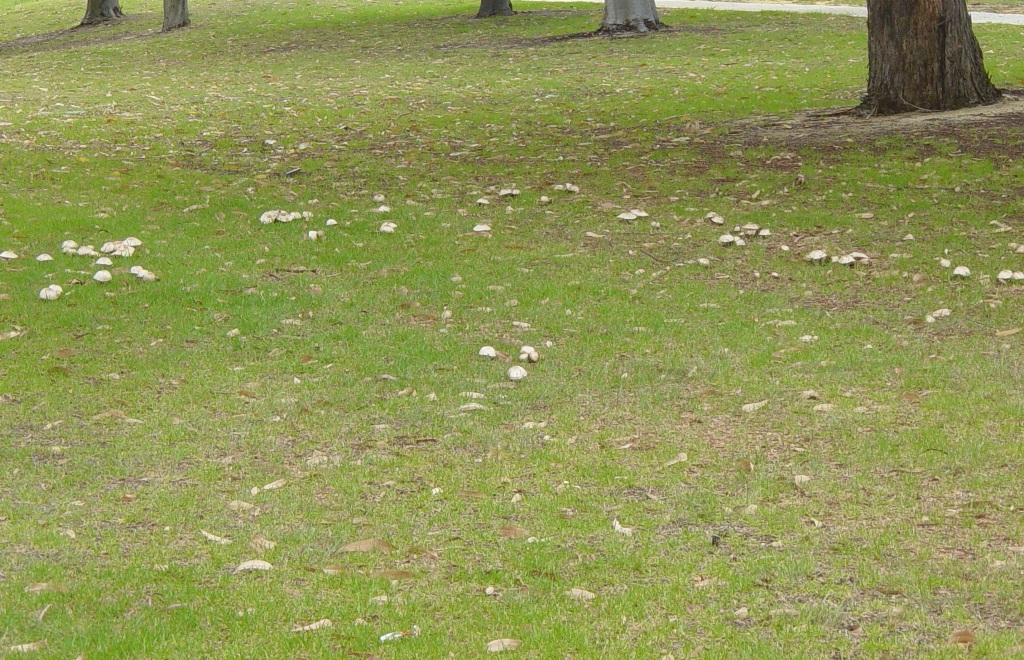
At various times of year, including mid summer, the parks around Perth erupt in large amounts of mushrooms. These grow in circles that can be 10 or more metres in diameter.
Agaricus arvenses forming a large ring in a park in Perth.
Viewed up close, the mushrooms have a distinctive appearance.
These mushrooms have a smell of almonds that varies in intensity, depending on the location. Some smell so strongly of almonds that they can only be used as a flavouring. The almond smell is due to the presence of benzaldehyde. This has been shown by gas chromatography.
These mushrooms are white gilled initially and then the gills turn to dark brown with age. They also bruise yellow, which is often taken as a sign of inedibility. In fact, however, the yellow staining mushrooms that must be avoided are Agaricus xanthodermus and other species which contain phenol. To be able to eat these mushrooms with confidence, one needs to be able to distinguish between the smell of phenol and the smell of benzaldehyde. That is the smell of phenyl disinfectant and the smell of almond essence.
I find that the small mushrooms are the best to eat. I have seen other people collecting these. Some elderly Italian gentlemen. I have also grown this mushroom. Well, just one small one!
Here is a picture of a small one, taken in Dagleish, Perth, on 29 March 2010.
In fact, these were the first mushrooms to be put into cultivation, before the normal Agaricus bisporus, and if the early attempts at cultivation had turned out differently, we might be used to the taste of almond mushrooms.
Since these mushrooms grow in the open sunlight, it is interesting to speculate whether they contain significant quantities of vitamin D, since the development of this vitamin has been demonstrated in other members of the genus when exposed to ultraviolet light, as described in this slide presentation.
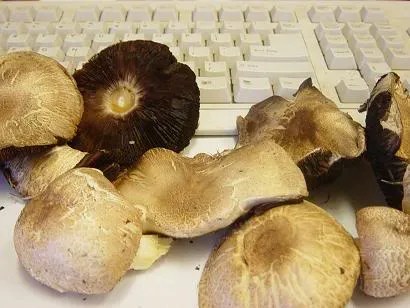
Here is a few that I picked one lunchtime that are sitting on my keyboard in my former office in Perth.
Agaricus xanthodermus, the one that has the phenolic smell, is not something that I have encountered often. I did come across this bunch of them growing in sand at Yeagarup though on 5 May 2007. The smell was very distinctive as was the yellow colour of the base of the stem.
December 2023
It is interesting to look back at this post now. Agaricus xanthodermus, or more correctly Agaricus section Xanthodermatei have pretty well taken over SW Western Australia now. I see them everywhere, in parks, on farms, in gardens and roadside verges.
One last comment. These mushrooms only have white gills at the immature stage. One should be very careful to ensure that the gills turn brown with age. Never eat a mushroom with white gills in the belief that it is a field mushroom unless you have established that you are looking at the immature stage of an Agaricus. That will take some experience. Failure to heed this advise could be fatal!
Mature specimens of Agaricusnever have white gills. The deadly Amanitas do.
When the first autumn rains come it is time to head down to the secret mushroom site where Agaricus bitorquis can be found year after year.
For some reason, they seem to favour growing under she-oak trees. Quite often they are found fully grown but still buried, with just the top of the cap visible in the middle of a lump in the ground.
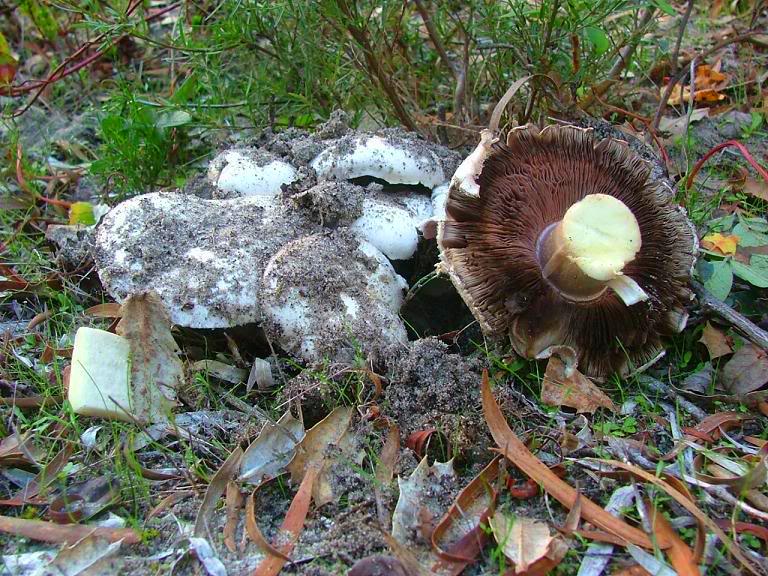
These mushrooms can grow very big. 150mm across is not uncommon and they are thick and fleshy with it. When cut, the surfaces bruise slightly red. This picture shows one I am holding in my hand to give some idea of size and shape.
When cut through, they show a reddish staining, as shown on this picture.
At my favourite site for bitorquis, there are several other edible mushrooms. In this picture can be seen some Coprinus comatus and an Agaricus arvensis, all picked at the same site and ready for the pan!
As a postscript, I have read that these are sold as supermarket mushrooms, though I have never seen the red staining so distinct as on the ones in the wild.
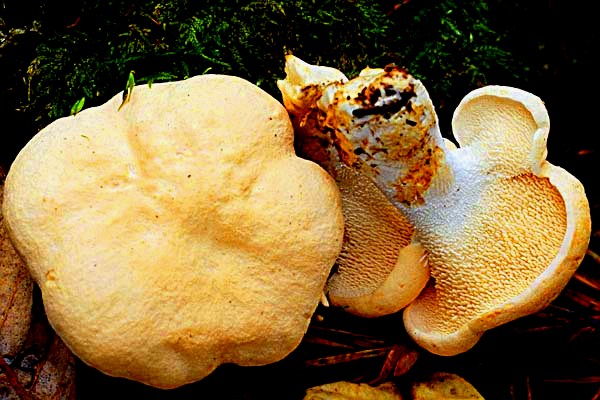
One very common mushroom throughout the SW of WA is a species commonly known as Hydnum repandum. It differs from normal mushrooms in that it has spines instead of gills or pores.
It can be found in open marri/jarrah forest in hills around Perth, but down here I find it most frequently in association with tea-tree (Taxandria) scrub on my property. Like the Chantarelle, it grows in rings.
It is a relatively long lasting mushroom, not prone to insect attack or rot. Though small, it is not hard to pick enough for a meal or two in half an hour if you are in the right area.
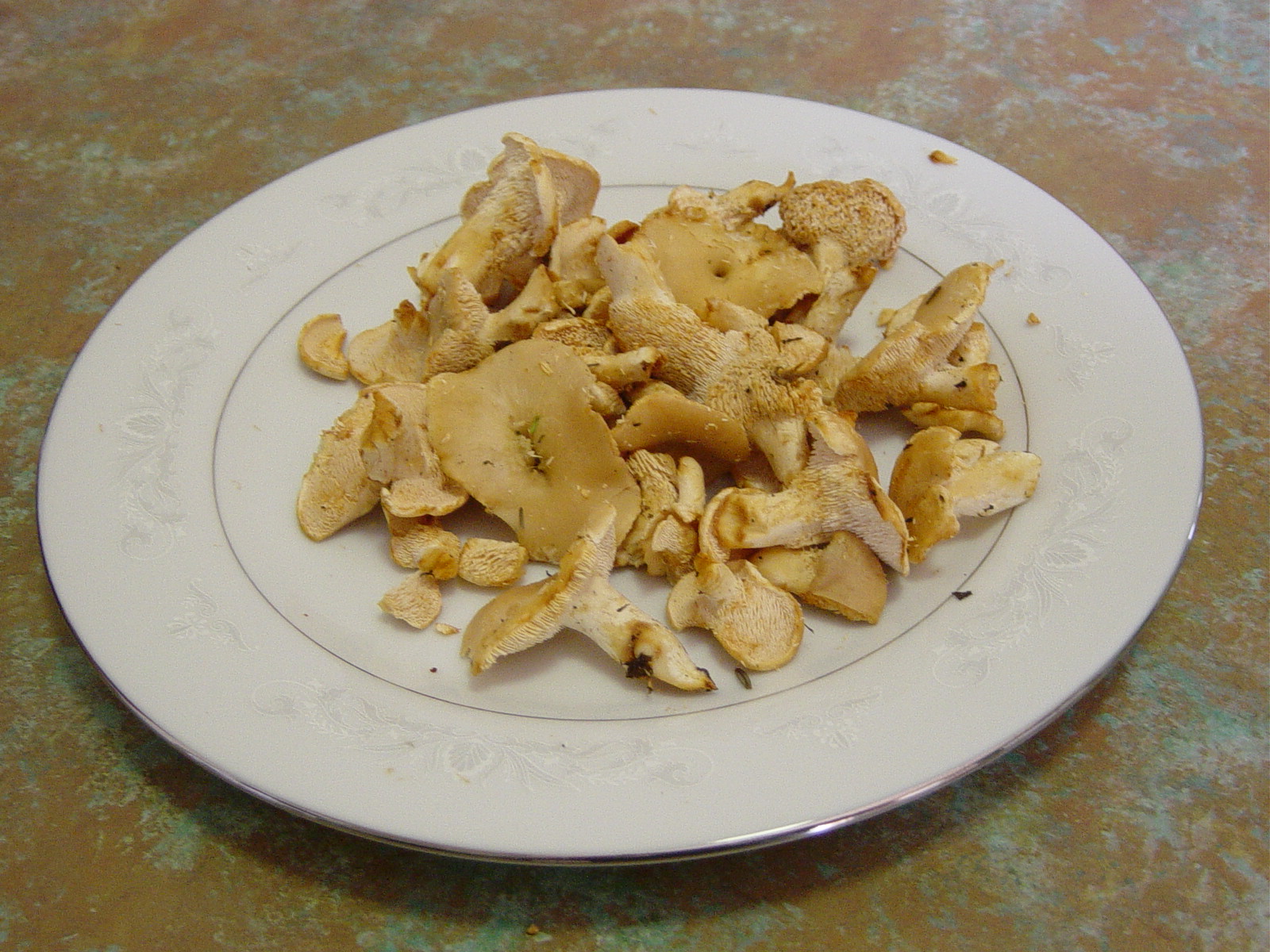
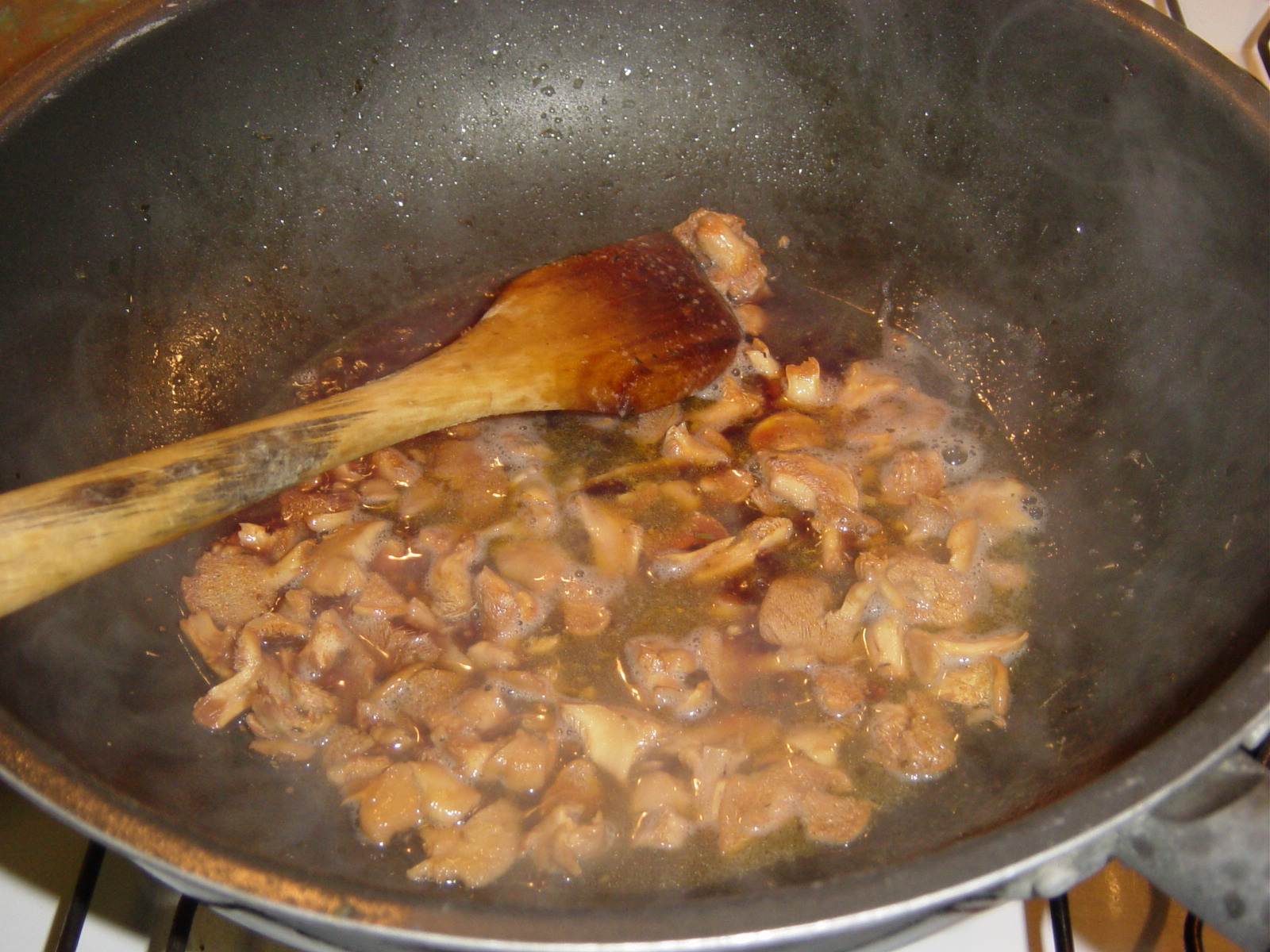
A favourite dish I make with these involves putting them into a pan with some chicken stock and red wine and reducing the volume to about half. Then chicken can be added, along with vegetables and some cream to finish.
A close-up of the mushroom is shown below, but the colour leaves something to be desired. I will try to get a better one this season.
These also occur on the east coast where they are reported to grow in Messmate forest in Victoria.
There is another very similar species or perhaps variety that grow in close proximity to these ones. They have been described as Hydnum ‘chestnut’ or Hydnum aff. repandum. These ones have a longer stem and a chestnut brown cap. I have also eaten these and they taste similar though they are not as robust in form as the orange toned species. This one also grows in Victoria and Tasmania.
Hydnum ‘chestnut'(crocidens), on my place
Both of these forms can exhibit a deep pore at the centre of the cap. I did wonder if this was Hydnum umbilicatum, but Roger Hilton advised me otherwise and since this feature appears to be randomly distributed in specimens of both types, it is most likely a morphological variation rather than a separate variety or species.
Note: August 2016
Some recent DNA information from suggests that the chestnut variety is Hydnum crocidens. It is interesting then to see the similarities between these mushrooms and those on Clive Shirley’s NZ site that are named as varieties of Hydnum crocidens.
It is even more interesting to read a recent phylogenetic analysis of Hydnum based on DNA analysis and published in May 2016. This puts paid to any concept that this mushroom is Hydnum repandum. Specimens in the WA Herbarium are of un-named species (17 and 19) and others are unequivocally Hydnum crocidens. The 3 species from New Zealand are all found in Australia.
The name ‘crocidens‘ derives from mycologist Mordacai Cooke, who described them in 1890. Below is a brief excerpt from his 1892 book ‘Handbook of Australian Fungi’, together with his illustration.
Cooke’s illustration of Hydnum crocidens
Species fungorum (Oct 2022) says that the current name for H. crocidens is H. ambustrum, described by Cooke and Masse slightly earlier in 1887.
Spines of Hydnum crocidens
Under the microscope, the spines appear glistening white with some of them displaying an orange-coloured point. There is some suggestion from this image that the spines are hollow.
The spores of this species are very small and almost spherical. My sizing is slightly larger than that reported by Cooke.
Spores of Hydnum crocidens
The spores are borne on basidia that are normal to the surface of the spines. From what I can make out there appear to be 5 spores on each basidium.
Basidia of Hydnum crocidens
It is noticeable that these mushrooms are resistant to decay. They can last for many weeks in the wild without developing the fungal infections like Hypomyces that cause the rapid demise of other species. This suggests that they have some inherent antimicrobial activity.
A remarkable example of this resistance is shown in the images below. These specimens were collected on 7 August and this photograph was taken on 24 October, which is a period of 78 days. They have been kept in an ordinary refrigerator in a plastic zip-lock bag. There is not the slightest visual hint of decay nor any odour. I would expect most mushrooms to be significantly degraded over this period.
Hydnum after 78 days in plastic bag in refrigeratorHydnum after 78 days in a plastic bag at 5 degrees C
Medicinal use of Hydnum.
Recent (2021) research has shown that extracts from Hydnum have antibiofilm activity. This is important because many chronic bacterial infections, such as the childhood ear infection Otitis media rely on the formation of a biofilm for their persistence and their resistance to antibiotics. While this research is behind a paywall, the abstract suggests that extracts of the mushroom used in conjunction with antibiotics can resolve biofilm infections. This journal has a Q3 ranking, so it will be interesting to see if this surfaces in one of the higher ranking journals over time.
Note 29/10/24 There is a focus on the importance of biofilms to antimicrobial resistance reported in Nature at this link. Chemistry
Some components of the mushroom include the two very closely related flavinoids myricetin and apigenin. The structures of these are shown below.
These two compounds are the subject of a lot of publications. As an example, myricetin has recently been reported to have potential as an anti-viral and anti-inflammatory agent with potential to be useful in the treatment of Covid-19.
Polar extracts of the mushroom are reported to contain substantial amounts of quinic acid. This would tend to make the mushroom taste bitter. I haven’t really noticed that, but I have not tasted it raw.
There are anecdotal reports that consumption of Hydnum as an uplifting effect on mood. I have not observed this effect personally.






 This fungus is always associated with pine trees and emerges in huge numbers in pine forests all over the country. There are two common species, S. granulatus, the normal one where I am and S. luteus, which is more common up near Perth. The main difference is that the former has no ring on the stem.





![mushrooms_stain_20_seconds[1]](https://i0.wp.com/morrie2.com/wp-content/uploads/2010/05/mushrooms_stain_20_seconds1.jpg?ssl=1)